On a Red Station, Drifting is a 2012 science fiction novella by Aliette de Bodard. Set in her Xuya Universe, it focuses on two women aboard a space station with a failing artificial intelligence. It received critical acclaim, becoming a finalist for the 2012 Nebula Award for Best Novella, the 2013 Hugo Award for Best Novella, and the 2013 Locus Award for Best Novella. == Plot == Lê Thi Linh is a magistrate of the Dai Viet Empire who is forced to flee her planet after criticizing the Emperor’s wartime policies. At the same time, rebel groups seize control of her planet and kill most of her subordinates. Linh seeks refuge with her distant relatives on Prosper Station. Prosper is controlled by an artificial intelligence called the Honoured Ancestress. Lê Thi Quyen, Linh’s cousin by marriage, manages the day-to-day operations of Prosper while her husband is away at war. Quyen and Linh immediately fall into conflict. Quyen’s brother-in-law Huu Hieu sells his mem-implants, which are copies of their ancestors’ consciousnesses. Meanwhile, the Honoured Ancestress experiences increasingly severe technical problems. Hieu and Linh become close. Hieu plans use the money from the sale of the implants to leave Prosper and marry his lover on a different station. Linh is upset knowing that she will never be able to leave. A visiting cousin, Lady Oahn, provides schematics for the repair of the Honoured Ancestress. In an effort to hurt Quyen, Linh writes an unflattering poem at a banquet honoring Oanh. In doing so, she reveals that Hieu is trying to leave Prosper. Hieu attempts suicide out of shame, but Linh rescues him. Quyen is able to repair the Honoured Ancestress, restoring her functionality at the expense of erasing many of her memories. The Emperor’s Embroidered Guard arrives at Prosper Station in search of Linh. Linh finds the missing mem-implants and returns them to Quyen. Quyen and Linh briefly reconcile before Linh is arrested and removed from Prosper Station. == Major themes == A review in Kirkus wrote that the novel's "familiar setting" was a "departure point" for the novel to explore its themes. The novel explores family ties; almost everyone on Prosper Station is related in some fashion. Additionally, the use of ancestors' mem-implants further explores the concept of family ties, with some descendants being considered more "worthy" than others due to their higher number of implants. The novel also explores questions of worth, as those who fail at ability tests are often forced to become the "lesser partners" in marriages and are discriminated against due to their perceived lack of achievement. The author notes that it is interesting that gender plays no role in the question of worth, and that the majority of the men in the story are actually the "lesser partner" in their marriage. == Style == The novel is divided into three sections. Liz Bourke wrote that each section builds thematically "towards an emotional crescendo". == Reception == Writing for Locus, Liz Bourke praised the novel's exploration of interpersonal conflict between Linh and Quyen, writing that "essentially subverts the popularly-understood derogatory overtones of 'domestic conflict'". Bourke also praised the story's tension, calling it "so well-strung the prose practically vibrates under its influence". A review for Kirkus stated that the novel is a "beautifully realized story and the characters, plot, theme and writing are expertly crafted." === Awards ===
Geofence warrant
A geofence warrant or a reverse location warrant is a search warrant issued by a court to allow law enforcement to search a database to find all active mobile devices within a particular geo-fence area. Courts have granted law enforcement geo-fence warrants to obtain information from databases such as Google's Sensorvault, which collects users' historical geolocation data. Geo-fence warrants are a part of a category of warrants known as reverse search warrants. == History == Geofence warrants were first used in 2016. Google reported that it had received 982 such warrants in 2018, 8,396 in 2019, and 11,554 in 2020. A 2021 transparency report showed that 25% of data requests from law enforcement to Google were geo-fence data requests. Google is the most common recipient of geo-fence warrants and the main provider of such data, although companies including Apple, Snapchat, Lyft, and Uber have also received such warrants. == Legality == === United States === Some lawyers and privacy experts believe reverse search warrants are unconstitutional under the Fourth Amendment to the United States Constitution, which protects people from unreasonable searches and seizures, and requires any search warrants be specific to what and to whom they apply. The Fourth Amendment specifies that warrants may only be issued "upon probable cause, supported by Oath or affirmation, and particularly describing the place to be searched, and the persons or things to be seized." Some lawyers, legal scholars, and privacy experts have likened reverse search warrants to general warrants, which were made illegal by the Fourth Amendment. Groups including the Electronic Frontier Foundation have opposed geo-fence warrants in amicus briefs filed in motions to quash such orders to disclose geo-fence data. In 2024, a panel of the United States Fourth Circuit Court of Appeals considered data acquired from Google’s Sensorvault not to be a search, but non-private business records when users opt-in to Google’s location history. However, upon a rehearing en banc, the Court vacated that decision. In April 2025, the full Court affirmed the judgment solely on the 'good faith' exception, leaving the underlying constitutional question of whether geofence warrants constitute a search unsettled in the Circuit. However, the United States Fifth Circuit Court of Appeals found that geofence warrants are "categorically prohibited by the Fourth Amendment." The split in Circuits prompted the United States Supreme Court to agree to hear Chatrie v. United States in January 2026.
Biorobotics
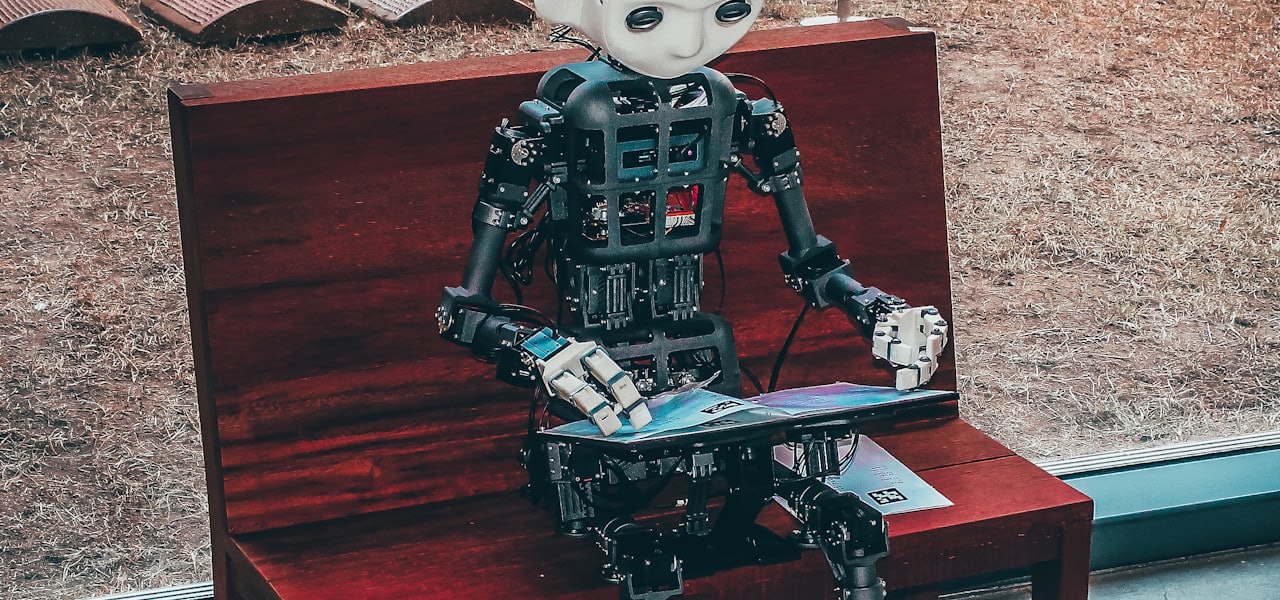
Biorobotics is an interdisciplinary science that combines the fields of biomedical engineering, cybernetics, and robotics to develop new technologies that integrate biology with mechanical systems to develop more efficient communication, alter genetic information, and create machines that imitate biological systems. == Cybernetics == Cybernetics focuses on the communication and system of living organisms and machines that can be applied and combined with multiple fields of study such as biology, mathematics, computer science, engineering, and much more. This discipline falls under the branch of biorobotics because of its combined field of study between biological bodies and mechanical systems. Studying these two systems allows for advanced analysis on the functions and processes of each system as well as the interactions between them. === History === Cybernetic theory is a concept that has existed for centuries, dating back to the era of Plato where he applied the term to refer to the "governance of people". The term cybernetique is seen in the mid-1800s used by physicist André-Marie Ampère. The term cybernetics was popularized in the late 1940s to refer to a discipline that touched on, but was separate, from established disciplines, such as electrical engineering, mathematics, and biology. === Science === Cybernetics is often misunderstood because of the breadth of disciplines it covers. In the early 20th century, it was coined as an interdisciplinary field of study that combines biology, science, network theory, and engineering. Today, it covers all scientific fields with system related processes. The goal of cybernetics is to analyze systems and processes of any system or systems in an attempt to make them more efficient and effective. === Applications === Cybernetics is used as an umbrella term so applications extend to all systems related scientific fields such as biology, mathematics, computer science, engineering, management, psychology, sociology, art, and more. Cybernetics is used amongst several fields to discover principles of systems, adaptation of organisms, information analysis and much more. == Genetic engineering == Genetic engineering is a field that uses advances in technology to modify biological organisms. Through different methods, scientists are able to alter the genetic material of microorganisms, plants and animals to provide them with desirable traits. For example, making plants grow bigger, better, and faster. Genetic engineering is included in biorobotics because it uses new technologies to alter biology and change an organism's DNA for their and society's benefit. === History === Although humans have modified genetic material of animals and plants through artificial selection for millennia (such as the genetic mutations that developed teosinte into corn and wolves into dogs), genetic engineering refers to the deliberate alteration or insertion of specific genes to an organism's DNA. The first successful case of genetic engineering occurred in 1973 when Herbert Boyer and Stanley Cohen were able to transfer a gene with antibiotic resistance to a bacterium. === Science === There are three main techniques used in genetic engineering: The plasmid method, the vector method and the biolistic method. ==== Plasmid method ==== This technique is used mainly for microorganisms such as bacteria. Through this method, DNA molecules called plasmids are extracted from bacteria and placed in a lab where restriction enzymes break them down. As the enzymes do this, some develop a rough edge that resembles that of a staircase which is considered 'sticky' and capable of reconnecting. These 'sticky' molecules are inserted into another bacteria where they will connect to the DNA rings with the altered genetic material. ==== Vector method ==== The vector method is considered a more precise technique than the plasmid method as it involves the transfer of a specific gene instead of a whole sequence. In the vector method, a specific gene from a DNA strand is isolated through restriction enzymes in a laboratory and is inserted into a vector. Once the vector accepts the genetic code, it is inserted into the host cell where the DNA will be transferred. ==== Biolistic method ==== The biolistic method is typically used to alter the genetic material of plants. This method embeds the desired DNA with a metallic particle such as gold or tungsten in a high speed gun. The particle is then bombarded into the plant. Due to the high velocities and the vacuum generated during bombardment, the particle is able to penetrate the cell wall and inserts the new DNA into the cell. === Applications === Genetic engineering has many uses in the fields of medicine, research and agriculture. In the medical field, genetically modified bacteria are used to produce drugs such as insulin, human growth hormones and vaccines. In research, scientists genetically modify organisms to observe physical and behavioral changes to understand the function of specific genes. In agriculture, genetic engineering is extremely important as it is used by farmers to grow crops that are resistant to herbicides and to insects such as BTCorn. == Bionics == Bionics is a medical engineering field and a branch of biorobotics consisting of electrical and mechanical systems that imitate biological systems, such as prosthetics and hearing aids. It's a portmanteau that combines biology and electronics. === History === The history of bionics goes as far back in time as ancient Egypt. A prosthetic toe made out of wood and leather was found on the foot of a mummy. The time period of the mummy corpse was estimated to be from around the fifteenth century B.C. Bionics can also be witnessed in ancient Greece and Rome. Prosthetic legs and arms were made for amputee soldiers. In the early 16th century, a French military surgeon by the name of Ambroise Pare became a pioneer in the field of bionics. He was known for making various types of upper and lower prosthetics. One of his most famous prosthetics, Le Petit Lorrain, was a mechanical hand operated by catches and springs. During the early 19th century, Alessandro Volta further progressed bionics. He set the foundation for the creation of hearing aids with his experiments. He found that electrical stimulation could restore hearing by inserting an electrical implant to the saccular nerve of a patient's ear. In 1945, the National Academy of Sciences created the Artificial Limb Program, which focused on improving prosthetics since there were a large number of World War II amputee soldiers. Since this creation, prosthetic materials, computer design methods, and surgical procedures have improved, creating modern-day bionics. === Science === ==== Prosthetics ==== The important components that make up modern-day prosthetics are the pylon, the socket, and the suspension system. The pylon is the internal frame of the prosthetic that is made up of metal rods or carbon-fiber composites. The socket is the part of the prosthetic that connects the prosthetic to the person's missing limb. The socket consists of a soft liner that makes the fit comfortable, but also snug enough to stay on the limb. The suspension system is important in keeping the prosthetic on the limb. The suspension system is usually a harness system made up of straps, belts or sleeves that are used to keep the limb attached. The operation of a prosthetic could be designed in various ways. The prosthetic could be body-powered, externally-powered, or myoelectrically powered. Body-powered prosthetics consist of cables attached to a strap or harness, which is placed on the person's functional shoulder, allowing the person to manipulate and control the prosthetic as he or she deems fit. Externally-powered prosthetics consist of motors to power the prosthetic and buttons and switches to control the prosthetic. Myoelectrically powered prosthetics are new, advanced forms of prosthetics where electrodes are placed on the muscles above the limb. The electrodes will detect the muscle contractions and send electrical signals to the prosthetic to move the prosthetic. The downside to this type of prosthetic is that if the sensors are not placed correctly on the limb then the electrical impulses will fail to move the prosthetic. TrueLimb is a specific brand of prosthetics that uses myoelectrical sensors which enable a person to have control of their bionic limb. ==== Hearing aids ==== Four major components make up the hearing aid: the microphone, the amplifier, the receiver, and the battery. The microphone takes in outside sound, turns that sound to electrical signals, and sends those signals to the amplifier. The amplifier increases the sound and sends that sound to the receiver. The receiver changes the electrical signal back into sound and sends the sound into the ear. Hair cells in the ear will sense the vibrations from the sound, convert the vibrations into nerve signals, and send it to the brain so
Acoustic model
An acoustic model is used in automatic speech recognition to represent the relationship between an audio signal and the phonemes or other linguistic units that make up speech. The model is learned from a set of audio recordings and their corresponding transcripts. It is created by taking audio recordings of speech, and their text transcriptions, and using software to create statistical representations of the sounds that make up each word. == Background == Modern speech recognition systems use both an acoustic model and a language model to represent the statistical properties of speech. The acoustic model models the relationship between the audio signal and the phonetic units in the language. The language model is responsible for modeling the word sequences in the language. These two models are combined to get the top-ranked word sequences corresponding to a given audio segment. Most modern speech recognition systems operate on the audio in small chunks known as frames with an approximate duration of 10ms per frame. The raw audio signal from each frame can be transformed by applying the mel-frequency cepstrum. The coefficients from this transformation are commonly known as mel-frequency cepstral coefficients (MFCCs) and are used as an input to the acoustic model along with other features. Recently, the use of convolutional neural networks has led to major improvements in acoustic modeling. == Speech audio characteristics == Audio can be encoded at different sampling rates (i.e. samples per second – the most common being: 8, 16, 32, 44.1, 48, and 96 kHz), and different bits per sample (the most common being: 8-bits, 16-bits, 24-bits or 32-bits). Speech recognition engines work best if the acoustic model they use was trained with speech audio which was recorded at the same sampling rate/bits per sample as the speech being recognized. == Telephony-based speech recognition == The limiting factor for telephony based speech recognition is the bandwidth at which speech can be transmitted. For example, a standard land-line telephone only has a bandwidth of 64 kbit/s at a sampling rate of 8 kHz and 8-bits per sample (8000 samples per second 8-bits per sample = 64000 bit/s). Therefore, for telephony based speech recognition, acoustic models should be trained with 8 kHz/8-bit speech audio files. In the case of voice over IP, the codec determines the sampling rate/bits per sample of speech transmission. Codecs with a higher sampling rate/bits per sample for speech transmission (which improve the sound quality) necessitate acoustic models trained with audio data that matches that sampling rate/bits per sample. == Desktop-based speech recognition == For speech recognition on a standard desktop PC, the limiting factor is the sound card. Most sound cards today can record at sampling rates of between 16–48 kHz of audio, with bit rates of 8- to 16-bits per sample, and playback at up to 96 kHz. As a general rule, a speech recognition engine works better with acoustic models trained with speech audio data recorded at higher sampling rates/bits per sample. But using audio with too high a sampling rate/bits per sample can slow the recognition engine down. A compromise is needed. Thus for desktop speech recognition, the current standard is acoustic models trained with speech audio data recorded at sampling rates of 16 kHz/16 bits per sample.
Procreate (software)
Procreate is a raster graphics editor app for digital painting developed and published by the Australian company Savage Interactive for iOS and iPadOS. It was launched on the App Store in 2011. == Versions == === Procreate === Procreate for iPad was first released in 2011 by the Tasmanian software company Savage Interactive. In June 2013, Savage launched Procreate 2 in conjunction with iOS 7, adding new features such as higher resolution capabilities and more brush options. In 2016, Procreate became one of the top ten best-selling iPad apps on the App Store. In 2018, Procreate became the overall best selling iPad app. With iOS 26, Procreate adapted Liquid Glass into its software. As of March 2026, the most recent version of Procreate for the iPad is 5.4.9. === Procreate Pocket === Procreate Pocket was released to the App Store in December 2014. In 2018, Savage launched Procreate Pocket 2.0 to the App Store. In December 2018, Procreate Pocket received Apple's "App of the Year" award. As of September 2025, the most recent version of Procreate Pocket (for the iPhone) is 4.0.15. === Procreate Dreams === Procreate Dreams, their more recent app focused on 2D animation, was released on the App Store on November 22, 2023. While the application is commended for its intuitive interface and accessibility, some reviewers have noted that it may lack some key animations features, such as reference layers. In June 2024, Procreate Dreams received the 2024 Apple Design Award for Innovation. In December 2025, Savage Interactive released Procreate Dreams 2, a long awaited update and redesign to Procreate Dreams. == Features == The current versions of Procreate use Valkyrie, a proprietary graphics engine to allow customisable brush options and importing brushes from Adobe Photoshop. Procreate offers known features like layers, masks, and blending mode. Its biggest standout compared to other professional drawing software is its simple UI and comparatively easy learning curve. The app also allows for animation. Savage expanded upon Procreate's animation features with a companion app dedicated to 2D animation called Procreate Dreams, released in November 2023. On August 2024, Procreate announced that it would not be incorporating generative artificial intelligence into its software. Savage offers a free internet forum called Procreate Discussions in which users can ask for help, suggest ideas, and share user-generated content on the marketplace or the resources board. == Notable users == Concept artist Doug Chiang creates robot, vehicle, and creature designs for Star Wars in Procreate. Professional artists have also used Procreate to create the posters for Stranger Things, Logan, and Blade Runner 2049, as well as several covers for The New Yorker. It has also been professionally adopted at Marvel Comics, DC Comics, Disney Animation, and Pixar.
Jaggaer
JAGGAER, formerly SciQuest, is a provider of cloud-based business automation technology for Business Spend Management. Its headquarters is in Durham, North Carolina. == Company history == SciQuest was established in 1995 as a B2B eCommerce exchange.The company went public with an IPO in 1999. In 2001, SciQuest transitioned from a B2B exchange company into eProcurement software and supplier enablement platforms. SciQuest was taken private in 2004 and continued to move into eProcurement, inventory management and accounts payable automation. SciQuest completed an IPO in September 2010, raising approximately $57 million. SciQuest, and its 510 person workforce, was taken private in June 2016 as part of a $509 million acquisition by Accel-KKR, a private equity firm headquartered in Menlo Park, CA. In 2017 SciQuest was rebranded as JAGGAER and announced increased focus on offering a complete, integrated source-to-pay suite. Along with the name change, the company expanded its market focus to manufacturing, healthcare, consumer packaged goods, retail, education, life sciences, logistics and the public sector. JAGGAER acquired the European direct materials procurement specialist Pool4Tool in June 2017 giving it end-to-end direct as well as indirect materials procurement coverage. JAGGAER acquired spend management company BravoSolution in 2017, and entered into a joint venture with United Arab Emirates-based Tejari. In February 2019 JAGGAER launched JAGGAER One, which unifies its full product suite on a single platform. In 2019 the UK-based private equity firm Cinven acquired a majority holding in the company. Jim Bureau was subsequently named JAGGAER's Chief Executive Officer. Bureau left the firm in March 2023, and Andy Hovancik was announced as the company's CEO in June. In 2024, JAGGAER was acquired by Vista Equity Partners, a private equity firm specializing in enterprise software investments. == Current positioning == As of April 2025, JAGGAER positions itself as "an enterprise procurement and supplier collaboration SaaS provider." Its core technology platform, which is called JAGGAER One, serves "direct and indirect procurement with specializations in Higher Education, Discrete and Process Manufacturing, and Public Sector." == Product Categories == The JAGGAER One platform supports the following products: Spend Analytics Category Management Supplier Management Sourcing Contracts eProcurement Invoicing Inventory Management Supply Chain Collaboration Quality Management == Acquisitions == SciQuest acquired the following companies: AECsoft - January 2011. Provider of supplier management and sourcing technology. Upside Software, Inc. - August 2012. Provider of contract lifecycle management (CLM) solutions. Spend Radar, LLC - October 2012, Provider of spend analysis software. CombineNet - September 2013, Provider of advanced sourcing software JAGGAER acquired the following companies: POOL4TOOL - June 2017, Provider of direct sourcing and supply chain management software BravoSolution - December 2017, Provider of global platform spend management solutions
Cumulus (software)
Cumulus is a digital asset management software designed for client/server system which is developed by Canto Software. The product makes use of metadata for indexing, organizing, and searching. == History == Cumulus was first released as a Macintosh application in 1992, and was named by Apple Computer as the "Most Innovative Product of 1992". Cumulus introduced search capabilities beyond those available in the Macintosh at the time, particularly relating to thumbnails. Cumulus 1.0 was a single-user product with no network capabilities. Among the main features of Cumulus 1.0, the search function automatically generated previews and contained support for the included AppleTalk – Peer-to-Peer – network. Cumulus 2.5 was available in five different languages and received the 1993 MacUser magazine Eddy award for "Best Publishing & Graphics Utility". In 1995, Canto introduced the scanner software "Cirrus" to focus on the development of Cumulus. Cumulus 3, released in 1996, introduced a server version for the first time and contained the possibility to spread files over the Internet via the "Web Publisher". Since Apple offered Cumulus 3 with its "Workgroup Server" as a bundle, Cumulus became one of the leading digital asset management systems. Cumulus 4 was the first version that was network-ready, and was available for Macintosh, Windows and UNIX operating systems allowing for cross-platform file sharing. Released in 1998, the support of Solaris was discounted later. Cumulus 5 modified the software core to use an open architecture providing an API to external systems and databases. The open architecture of Cumulus 5 also enabled a more functional bridge between Cumulus and the Internet. Cumulus 6 introduced Embedded Java Plugin (EJP) which allowed system integrators to build custom Java plug-ins in order to extend the functionality of the Cumulus client. Cumulus 6.5 marked the end of the Cumulus Single User Edition product, which was licensed to MediaDex for further development and distribution. Cumulus 7 was introduced summer of 2006. Cumulus 8 was released in June 2009, with new indexing capabilities taking advantage of multicore/multiprocessor systems, and ability to manage a wider variety of file formats. Cumulus 8.5 was released in May 2011. Support was added for multilingual metadata, sometimes referred to as "World Metadata." Cumulus Sites was updated to support metadata editing and file uploads. Cumulus 8.6 was released in July 2012, and contains an updated user interface for the administration of Cumulus Sites and additional features for web-based administration of Cumulus. Other additions include features for collaboration links, multi-language support and automated version control. Cumulus 9 was released in September 2013 and introduced a new Web Client User Interface and the Cumulus Video Cloud. The Cumulus Web Client UI was redesigned to provide users with a modern, easy-to-use interface to support and guide the user while addressing modern business needs. The Cumulus Video Cloud extends the Cumulus video handling capabilities to add conversion and global streaming. Cumulus 9 also saw the addition of upload collection links which allow external collaborators to drag and drop files directly into Cumulus without needing a Cumulus account. Cumulus 9.1 was released in May 2014 and introduced the Adobe Drive Adapter for Cumulus which allows users to browse and search digital assets in Cumulus directly from Adobe work environments such as Photoshop, InDesign, Illustrator, Premier and other Adobe applications. Cumulus 10 (Cumulus X) was released July 2015 and introduced two mobile-friendly products: the Cumulus app and Portals. The Cumulus app on iOS was designed to allow users to collaborate either on an iPhone or iPad. Portals is the read-only version of the Cumulus Web Client where users can work with assets that admins allow. Cumulus 10.1 was introduced in January 2016 and included the InDesign Client integration where users can work with Adobe InDesign while accessing their assets from Cumulus. Cumulus 10.2 was introduced in September 2016 and brought the Media Delivery Cloud using Amazon Web Services (AWS). It allows users to manage their media rendition in a single source and distribute media files globally across different channels and devices. Cumulus 10.2.3 was released in February 2017 and came with a "crop and customize photos" feature for Portals and the Web Client. == Product overview == The cataloging of the file via upload into the archive is where Cumulus transfers maximum information about the file from the metadata. For image or photo files, this is typically Exif and IPTC data. The metadata is mainly used to search the archive. The use of embargo data supports license management for copyrighted material. The managed files can be cataloged and their usage can be set. The indexing is based on a predefined taxonomy, which is governed by the internal rules of the organization or by industry standards. You can specify whether files can only be used for specific purposes or only by certain groups of people. The production management system includes version management for files. Via the publication function, the files can be distributed directly via links or e-mails. It's also possible to access from the outside via the Cumulus Portals web interface, which allows a read access to released content from the catalog. There are different variants, starting with the "Workgroup archive server" up to the "Enterprise Business Server" for large companies. Both server and client are extensible through a Java-based plug-in architecture. Since version 7.0, there is a web application based on Ajax with a separate user interface. For access to the Cumulus catalog on mobile, there has been an application for Apple devices based on iOS since 2010. == Miscellaneous == In 2015, Cumulus developer Canto established the first Canto digital asset management (DAM) event. The event is held annually in Berlin. The Henry Stewart team has been hosting DAM conferences since 2006.